Hello and welcome once again to my blog on building my model railway SHIREBROOK YARD.
So last time the track plan was decided, checked on the base board so now for the fun part! In the end a model railway is about bringing a diorama to life, I can assure you the moment you turn the dial on the controller and the engine moves is not only a relief but also realisation that your planning has worked.
So your thinking he’s going to show us how to lay the track… Well yes but before that we have to weather it.
WEATHERING THE TRACK.
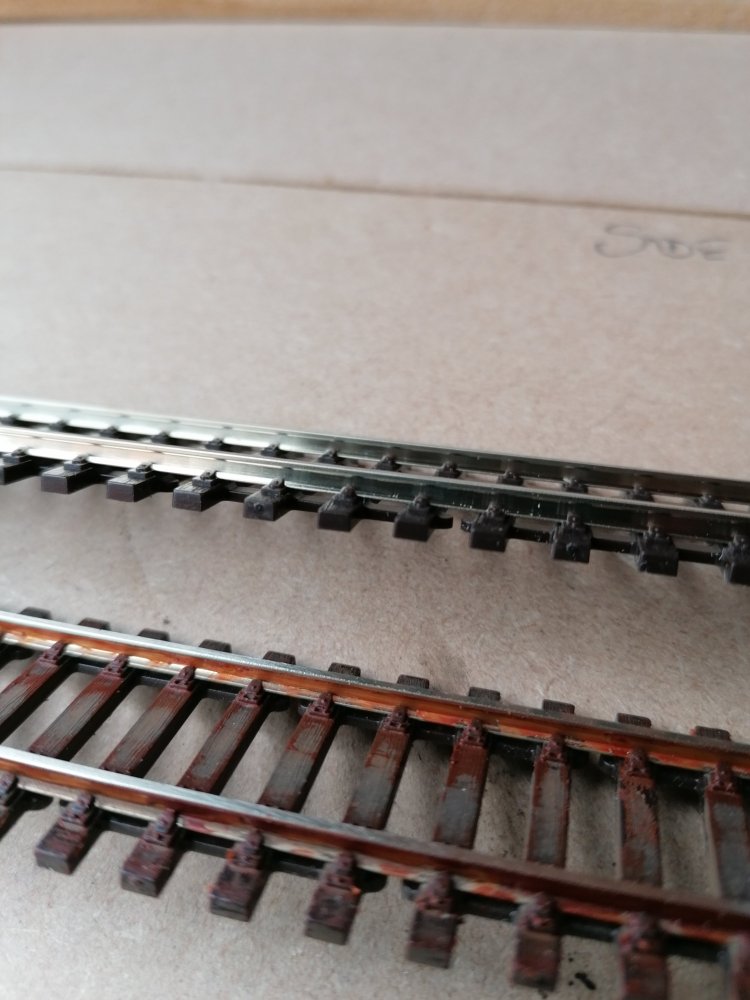
When you buy your track it will be all new and shinny but offcourse in the real world it won’t look like this. As you can see below the before and after look. Like most things in modelling there’s more than one to skin a cat, you can spray your track or in my case paint it.
First thing to do is mix up a “grime” for the sleepers, I tend to mix green and brown together. This gives the appearance of years of coal, grease and the vagaries of the British weather and when buried into the ballast it will loose that shinny look.
As for the rails, we’ll they need to simply look old and rusty. To do this again simple acrylic burnt umber will give you a rusty look, just paint it on. Don’t get too worried about getting it on the tops of the rails as it can be cleaned off using a track rubber when dry. As for the sleepers just blend in.
So now the track is ready for laying on the base board, right? Well no actually because we need POWER!
ELECTRICS.
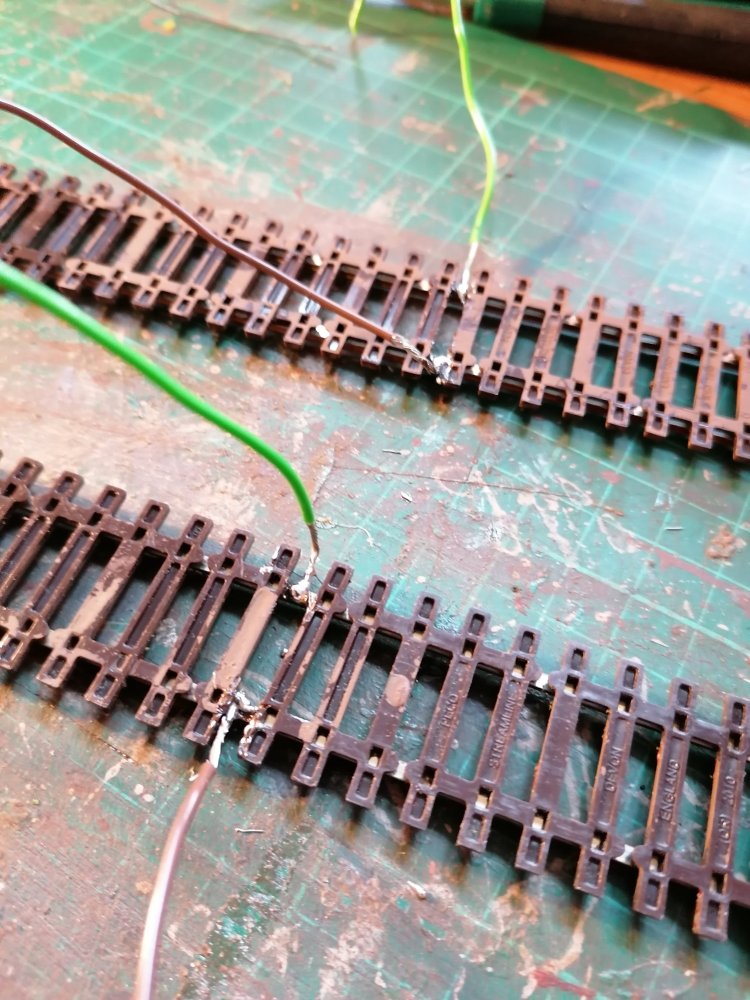
This is a simple operation however, to power the BUS (will explain later) you you will need dropper wires which are simply soldered to the underside of the track about 12 inches apart and fed through holes pre drilled in the baseboard. As you can see below.
Now can we lay some track? YES!
First get all your track laid out where you want it to run, this will ensure your dropper wire holes are all in the correct place and the track all joins together giving good electrical contact. Much easier to find out now than after glue is set.
Once you happy you can fix track to baseboard, again there are two ways to do this. Track pins or glue. My preferance is glue, reason being you don’t need to pre drill fiddly holes in the sleepers and you don’t end up with unsightly pins on your track. I use Bostic all perpose, simply put the glue on the baseboard and lay track. Weight it down and once dry jobs a good un. The only caveat to that is make sure no glue touches the moving parts of the points.
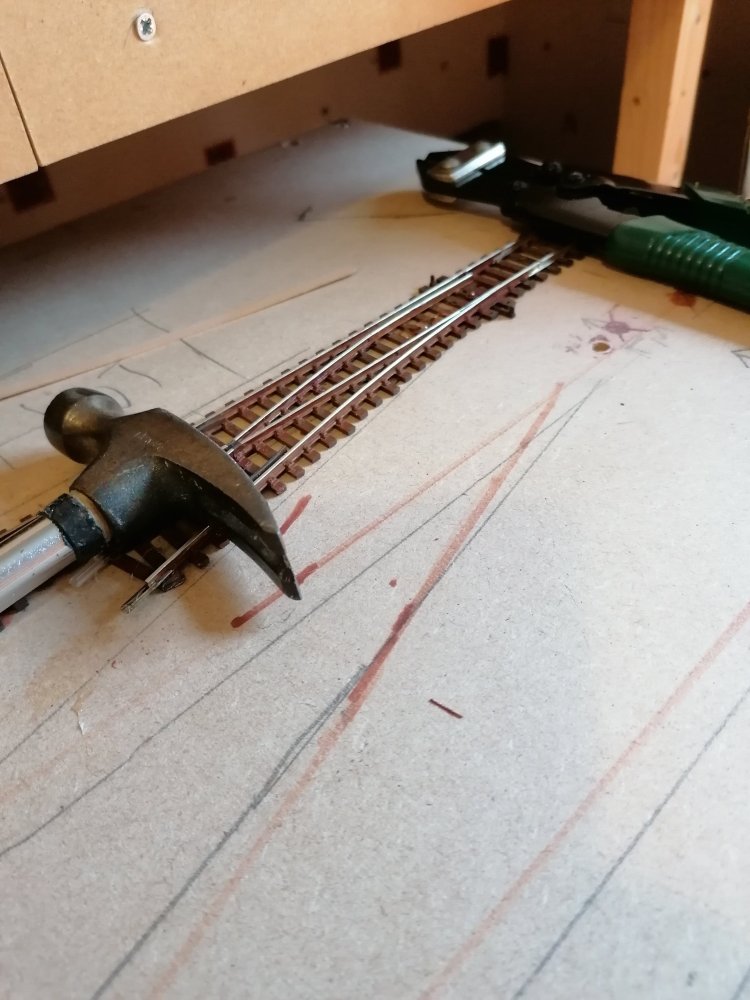
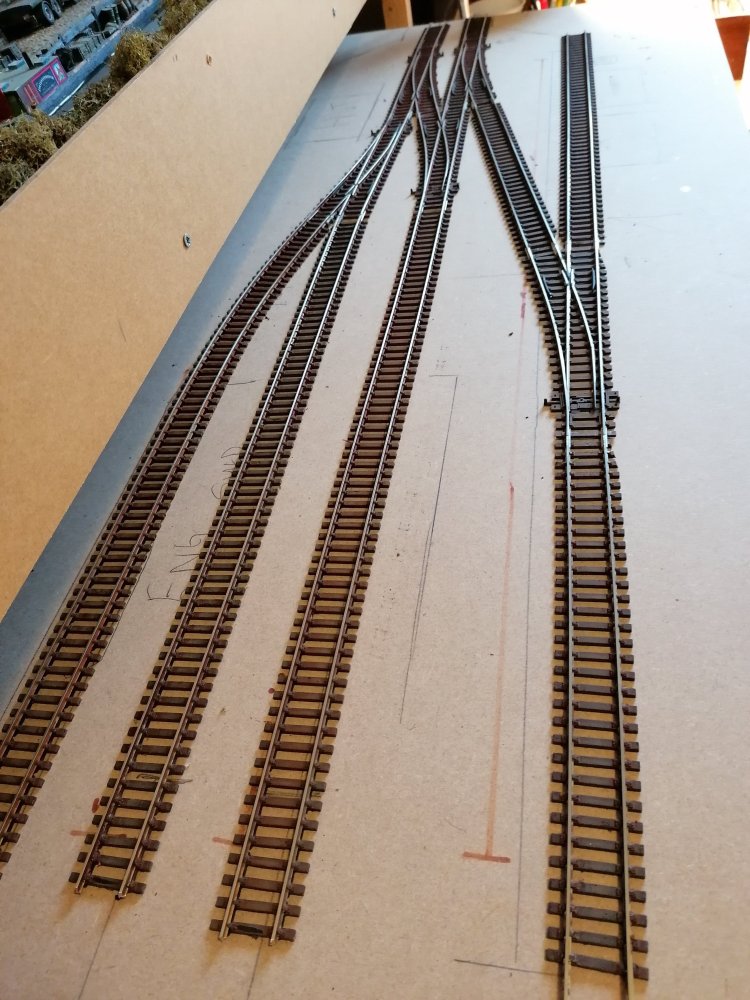
As you can see above soon your track plan will be a reality, question is will it work?
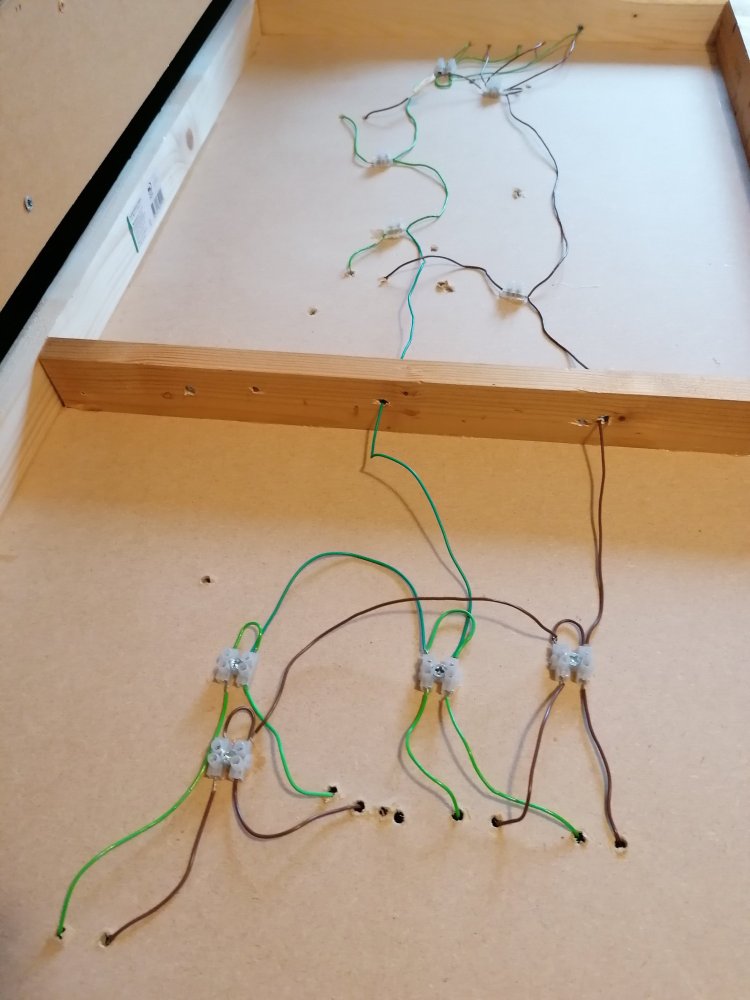
Above you can see the dropper wires coming from the track, colour coded so + and – can always be identified. Earlier I mentioned the Bus, now I have no idea why its called that but I’m sure somebody will tell me. Put simply DCC track is powered all the time so by fixing the dropper wires to the main power controller via a “loop” joined together using lego style joiners your layout is powered.
You can see above all brown wires are + and green -.
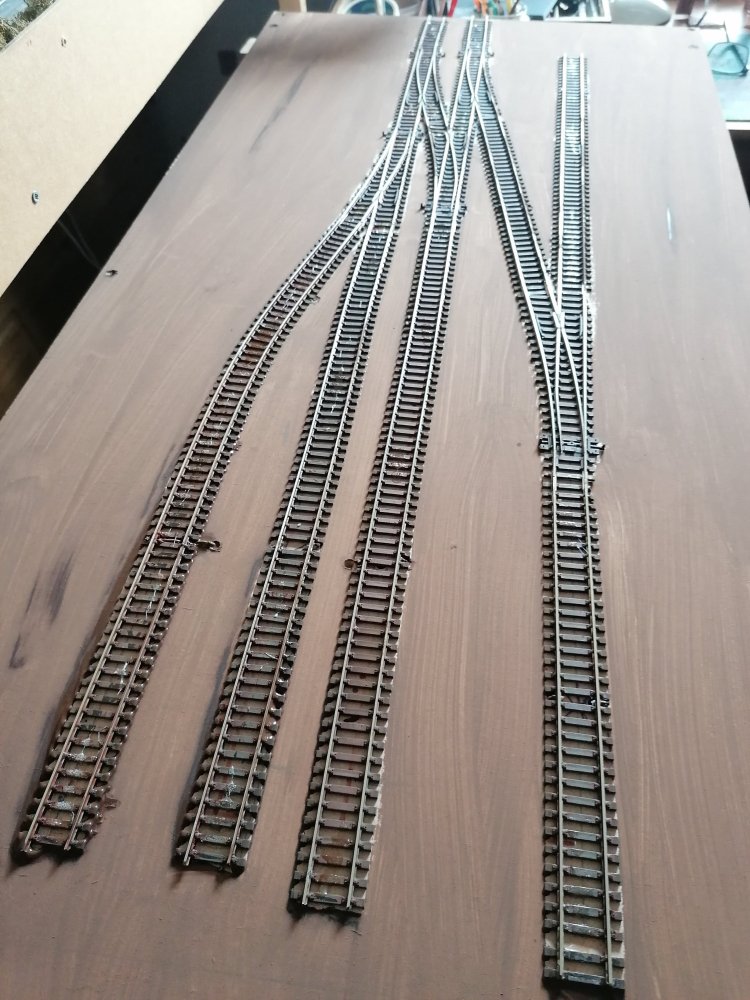
Once done a quick base coat of brown and we’re ready to try it out.
Next time, hopefully a video of a moving train, engine shed update and fixing the back boards.
Cheers Alan.
 Railway Imp